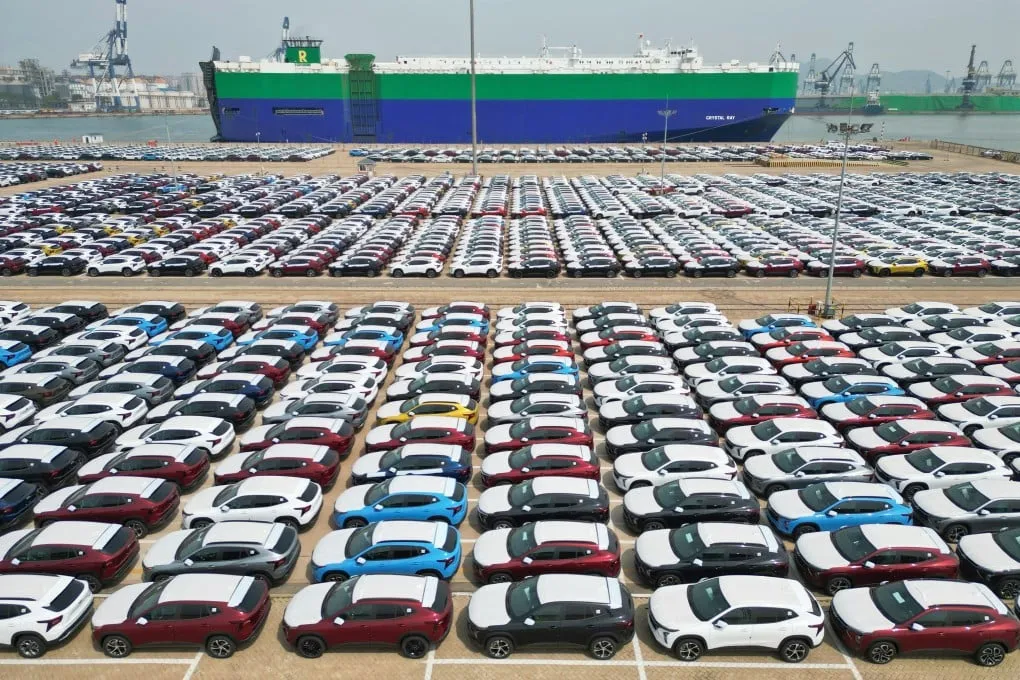
When China makes a move in the electric vehicle (EV) space, the world watches. And in September, it made a move so significant that it rippled across the global automotive and geopolitical landscape. China’s EV exports doubled compared to the same month last year, reaching 222,000 units, according to fresh data from the China Association of Automobile Manufacturers (CAAM).
This surge isn’t just about numbers, it’s a signal. A signal that Chinese automakers are shifting gears from domestic saturation to global domination. It’s not just a temporary spike; it’s a strategic shift driven by fierce domestic competition, international demand, and evolving trade landscapes. While much of the world debates tariffs and environmental goals, China is shipping EVs by the hundreds of thousands.
Let’s break down what’s really going on beneath the surface, and what it means for the global auto industry.
Export Explosion: 100% Growth in a Year
In September 2025, China exported 222,000 new energy vehicles (NEVs), a category that includes battery electric vehicles (BEVs) and plug-in hybrids (PHEVs). That’s 100% growth year-on-year, a staggering figure even by China’s high-growth standards. While slightly down from the 224,000 units in August, the annual doubling trend is unmistakable.
This isn’t just one strong month. It’s part of a consistent upward trend throughout the year as Chinese EV makers turn outward in response to domestic saturation and profit pressures. With price wars heating up at home, automakers are finding overseas markets not just attractive, but essential.
Why Are Chinese EVs Flooding Global Markets?
Domestic Price Wars and Overcapacity
The Chinese EV market is the largest in the world, but also one of the most competitive. Brands like BYD, Nio, Xpeng, and Leapmotor are locked in brutal price battles, often slashing margins to the bone just to maintain market share. Add in Tesla's aggressive pricing strategies, and you get a landscape where profitability is becoming harder to achieve.
Foreign Markets Offer Breathing Room
As a result, manufacturers are turning to Europe, Southeast Asia, the Middle East, and Africa. The Rhodium Group reports that in 2024, for the first time since 2014, Chinese automakers invested more overseas than domestically, a historic pivot. And while tariffs in the US, Canada, and EU have tightened the noose, Chinese players are already recalibrating, pouring resources into emerging regions with fewer restrictions and high demand for affordable EVs.
Case in Focus: BYD’s Global Acceleration
If there’s one company that exemplifies this trend, it’s BYD, China’s EV juggernaut. In September, BYD reported that the United Kingdom is now its largest export market, with sales there soaring 880% year-on-year.
That figure isn’t a typo. It’s evidence of two things:
-
Product-Market Fit: European consumers, long hesitant about Chinese brands, are now warming up to the value, technology, and design of EVs like the BYD Atto 3 and Dolphin.
-
Brand Trust Building: BYD is not just selling cars, it’s building brand presence. From localized dealership networks to partnerships with logistics firms, BYD is executing a long-term vision.
Domestic Market Dynamics: Golden September Wasn’t So Golden for All
September traditionally marks a peak season in China’s auto calendar, often referred to as “Golden September” due to increased sales driven by promotions and new model launches. But this year, the shine was uneven.
-
Overall domestic passenger car sales rose 11.2% YoY, but that’s a slowdown from the 15% rise in August.
-
BYD’s domestic sales actually fell 5.5% in September compared to a year ago, their first domestic decline since February 2024.
This divergence shows that while domestic demand is still alive, the momentum is softening. Subsidies for EV trade-ins, once a strong sales driver, are now being cut back by local governments, reducing the short-term boost they provided in the first half of the year.
Policy Pressures: Tariffs, Trade Tensions, and New Frontiers
China’s EV export boom isn’t happening in a vacuum. It’s occurring alongside a rise in geopolitical tensions and trade restrictions.
-
The EU has launched investigations into potential subsidies for Chinese EVs.
-
The US and Canada have imposed steep tariffs on Chinese-made EVs and components.
-
Port fees and rare earth curbs are further complicating trade logistics.
But Beijing is counter-punching by forging new trade alliances in the Middle East, Latin America, and Africa,markets where Western automakers often underperform or avoid altogether. These regions are now the next frontier for Chinese EVs.
The Bigger Picture: Can China Maintain the Momentum?
From a macro perspective, China’s EV export boom represents a critical inflection point in global automotive history. It’s no longer just about manufacturing scale; it’s about strategic deployment, brand development, and international positioning.
But sustaining this momentum will require navigating a minefield of:
-
Protectionist trade policies
-
Consumer trust issues in developed markets
-
Intense competition from legacy automakers and emerging startups
And let’s not forget the currency, shipping, and battery material risks that lie beneath the surface. With rare earth export controls tightening and energy prices fluctuating globally, the logistics of getting EVs from Chinese factories to foreign driveways are becoming more complex.
Conclusion
The doubling of China’s EV exports in September isn’t just a data point, it’s a declaration. A declaration that Chinese EV makers are no longer content with dominating their domestic turf. They are now looking outward, aggressively and strategically.
And they’re doing it not by playing catch-up, but by setting the pace, in affordability, in tech, in scale.
For Western automakers, this is a wake-up call. For global consumers, it’s a shift in choice and affordability. And for the industry as a whole, it signals a new era of EV globalization, with China at the wheel.