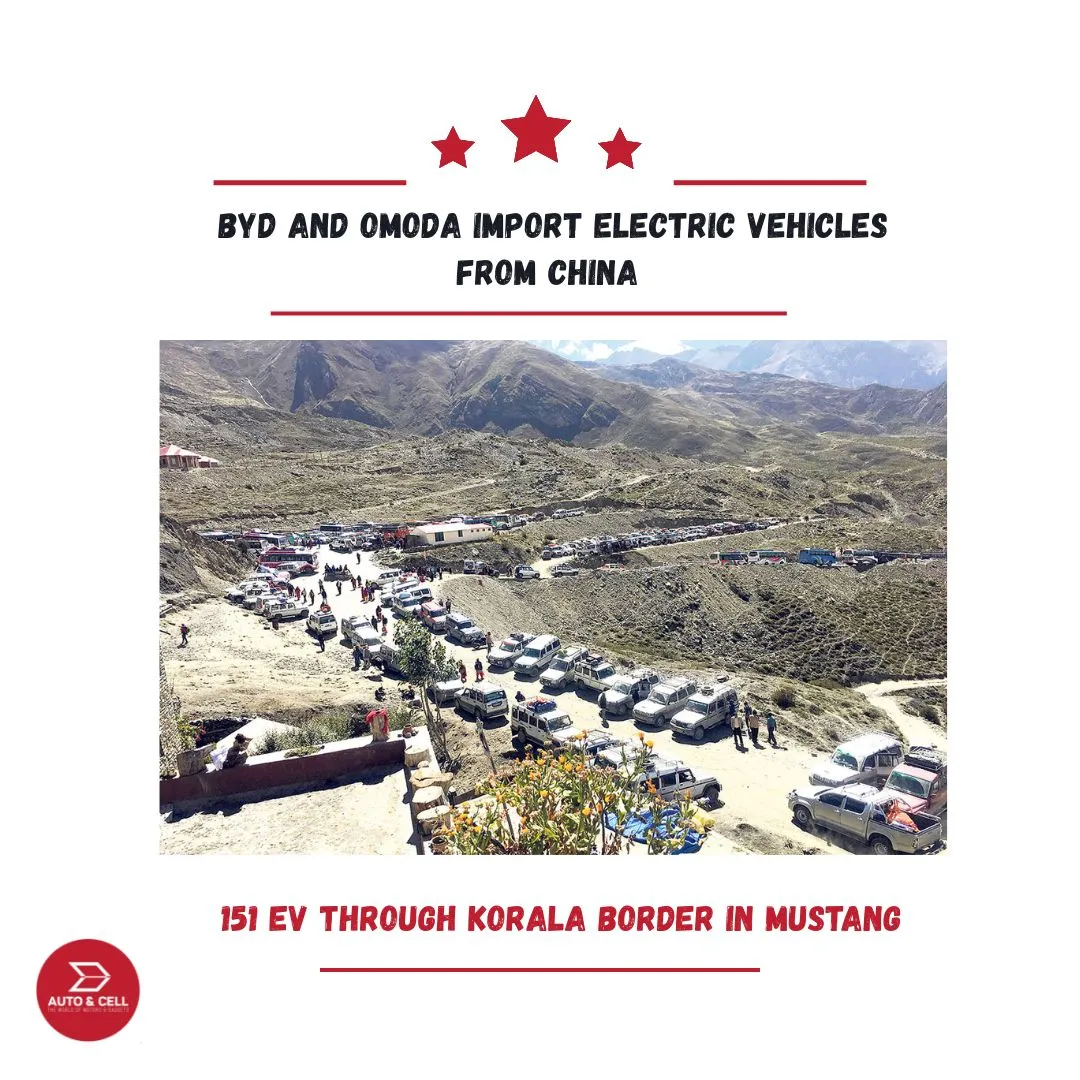
In a surprising yet strategic shift, Nepal has begun importing electric vehicles (EVs) through the remote Korala border in Mustang, marking a significant moment for the country’s auto industry and trade logistics. As landslides and floods rendered the traditionally busy Rasuwa and Tatopani borders inoperative, auto giants BYD and Omoda, represented in Nepal by Cimex Inc. and SPG Automobiles respectively, turned to the less-utilized Korala route to bring in a massive consignment of EVs.
A total of 151 electric vehicles have reportedly reached the Nechung customs point and are currently awaiting clearance. This not only highlights the resilience of Nepal’s EV ecosystem in the face of natural disruptions but also opens discussions about long-term diversification of import routes and infrastructure needs in the Himalayan region.
The Route Less Taken: Why Korala Border Came Into Play
The Korala border, located in Mustang, has long been overshadowed by the more accessible Kerung and Tatopani crossings. However, continuous monsoon-triggered landslides have left both major routes blocked for months. With festival season fast approaching and demand for new vehicles surging, importers had no choice but to explore alternatives.
Customs Chief Ramesh Khadka confirmed that 151 EVs, majority of them from BYD and Omoda, have been stationed at the Nechung customs point. The border officially resumed operations this Monday, and while customs processes are ongoing, no official clearance has been granted yet due to pending payment and declaration formalities.
Despite the logistical challenges, the move has provided some much-needed relief to dealers who have been struggling to restock vehicles since the NAIMA Expo and NADA Auto Show earlier this year.
Challenges of the Korala Route: Terrain, Power, and Connectivity
Importing EVs through Korala is no small feat. While it may be a scenic route nestled in the Mustang mountains, it’s also one of the most geographically complex corridors for transportation.
Firstly, EVs cannot be driven down the route without adequate charging infrastructure, a major issue at this remote location. As one local dealer noted, “You cannot run an EV from Korala to Kathmandu without charging it. We’re now focused on setting up temporary charging stations along the route.”
Moreover, the area suffers from unreliable electricity, patchy mobile networks, and virtually no internet in certain stretches. This creates hurdles not just for transport but also for customs documentation, communication, and coordination.
Despite these complications, authorities are now actively mobilizing resources to operationalize Korala as a semi-permanent alternative. The customs department has even installed the ASYCUDA system (Automated System for Customs Data) at Nechung, bringing some digital capability to this otherwise analogue checkpoint.
Logistics, Policy, and the Role of NRB
One of the biggest breakthroughs supporting the Korala operation came from the Nepal Rastra Bank (NRB). Until recently, Letters of Credit (LCs) for imports were only allowed through Tatopani and Rasuwa customs points. But in a key policy revision dated Bhadra 31 (Sept 16, 2025), NRB authorized banks to open LCs for imports via the Mustang customs office as well.
This has allowed formal documentation for EV imports via truck and rail routes from China, with Mustang customs becoming a recognized node in Nepal’s international trade network.
The Numbers Game: 151 EVs and Counting
While the customs department has yet to finalize brand-wise breakdowns, insiders confirm that most of the 151 vehicles are from BYD and Omoda, the two EV players aggressively expanding their foothold in Nepal.
-
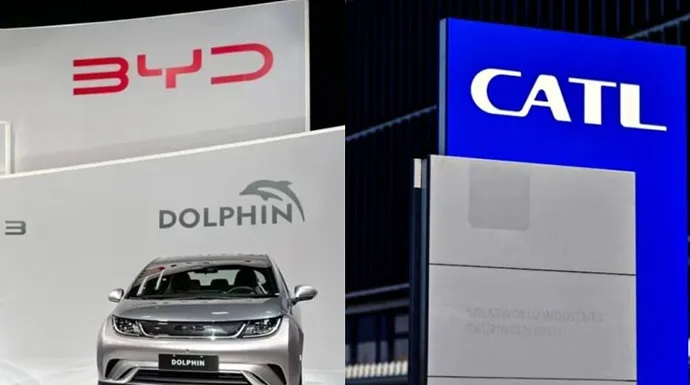
BYD, through its local distributor Cimex Inc., has long been a leading name in Nepal’s electric mobility push. Their lineup includes models like the BYD Atto 3, Dolphin, and Seal, all of which have found strong demand in the urban upper-middle class segment.
-
Omoda, a newer entrant represented by SPG Automobiles, has also gained traction with stylish crossovers like the Omoda 5 EV, boasting high safety ratings and feature-packed interiors.
While exact model numbers remain under wraps, the expectation is that many of these vehicles are destined for showrooms ahead of Dashain and Tihar, peak buying season in Nepal.
Road Conditions: What’s the State of the Kaligandaki Corridor?
The Korala route connects to the broader Kaligandaki Corridor, a nationally prioritized infrastructure project spanning 442 km and designed to link India and China through Nepal.
The southern segment, from Gaindakot to Maldhunga, is frequently disrupted by rain and landslides. Currently, several sections remain blocked due to heavy monsoon, including critical areas near Gulmi, Baglung, and Myagdi. According to engineers, 27 km of road still awaits blacktopping, and landslides remain a constant risk.
However, the Maldhunga–Beni–Jomsom–Korala stretch, which falls directly under the Mustang import route, is relatively more stable. Around 97 km of the 156 km Mustang section has been blacktopped, with temporary fixes enabling two-way vehicle movement. The remaining segments, especially near Sirubari in Myagdi, still need slope stabilization work, expected to complete after Dashain.
Implications for the Nepali Auto Market
With EV imports facing unprecedented logistical rerouting, the current scenario underscores both the fragility and adaptability of Nepal’s vehicle supply chain. While natural disasters continue to test infrastructure resilience, the industry's quick pivot to Mustang demonstrates an ability to innovate under pressure.
But the long-term sustainability of using the Korala route hinges on major improvements in power infrastructure, road conditions, and digital customs systems. If addressed, this could open a third major gateway for goods between Nepal and China, diversifying trade routes and enhancing national preparedness.
For now, all eyes are on the 151 EVs at Nechung. As customs declarations and LC payments proceed, dealers hope to get these vehicles showroom-ready within the next few weeks.
-original.webp)
-original.webp)
-original.webp)