Apple’s annual fall hardware event has always been more than just a product launch, it’s a barometer for where the company believes the future of computing is headed. This year, that future seems to revolve around one powerful, silicon-driven idea: speed meets intelligence.
On Wednesday, Apple pulled the curtain back on its next-generation lineup, the new MacBook Pro, iPad Pro, and Vision Pro, all powered by the much-anticipated M5 chip. These aren’t just spec bumps. They mark a significant shift in how Apple is shaping device performance around artificial intelligence, high-efficiency compute power, and user immersion.
For the average user? You’re getting better speed, smarter capabilities, and future-ready devices, all without a hike in starting prices. But for industry watchers and tech professionals, this is Apple’s clearest signal yet that its AI era has officially begun.
M5 Chip
At the core of this hardware refresh is the M5 chip, Apple’s latest in-house silicon, which is being touted as four times faster in peak compute performance compared to the M4. That’s not just evolutionary. That’s a near quantum leap in the AI realm, especially for workloads like machine learning inference, real-time video editing, and 3D rendering.
According to Johny Srouji, Apple’s SVP of Hardware Technologies, “M5 delivers a huge boost to AI workloads.” This isn't just marketing speak, Apple has essentially rearchitected the chip’s neural engine to be more intelligent, more efficient, and more scalable. It sets the stage for smoother on-device generative AI, predictive computing, and deeply personalized user experiences.
This is Apple’s silent but definitive entrance into the broader AI arms race, not with a chatbot, but with the silicon that could power thousands of such models locally.
MacBook Pro
The 14-inch MacBook Pro, supercharged by the M5 chip, is the most significant iteration in years, not because of a flashy redesign, but because of what lies under the hood.
Apple’s MacBook Pro has long been the go-to tool for creative professionals, developers, and power users, and this year’s version continues to honor that legacy while bringing it into the AI-powered future.
-
Performance Leap: The M5-equipped MacBook Pro promises faster rendering in Final Cut Pro, better multitasking, and significantly lower energy consumption, ideal for coders and designers on the move.
-
Display & Design: Apple hasn’t made major visual changes, which signals their confidence in the current form factor. The Liquid Retina XDR display still shines with its high brightness and contrast levels, perfect for media editing.
-
Starting Price: $1,599, the same as the M4 model, which shows Apple is not passing increased manufacturing or tariff-related costs down to the consumer. That’s a rare strategic move in today’s inflation-sensitive market.
More than ever, the MacBook Pro is not just a laptop, it's a mobile workstation built for an era where AI tools are becoming central to creative workflows.
iPad Pro
With a starting price of $999, the new 11-inch iPad Pro is positioning itself as the smartest and fastest tablet on the market, but more importantly, it continues to blur the lines between tablet and laptop.
-
M5 Inside: The iPad Pro isn’t just faster, it’s more intelligent. Thanks to the M5, it can handle complex multitasking, real-time drawing enhancements for artists, and run powerful pro apps previously reserved for Macs.
-
Design Language: Apple kept its sleek industrial design, which works, it's already thin, light, and durable. The updated model doesn’t reinvent the wheel but refines the internals for better performance-per-watt.
-
Use Case Expansion: With Apple Pencil and Magic Keyboard support, and new iPadOS updates, this device can easily become a hybrid tool for both leisure and productivity, especially for students, field workers, and creators.
In short, the iPad Pro is now less of an “iPhone with a larger screen” and more of an accessible, modular computing platform.
Vision Pro
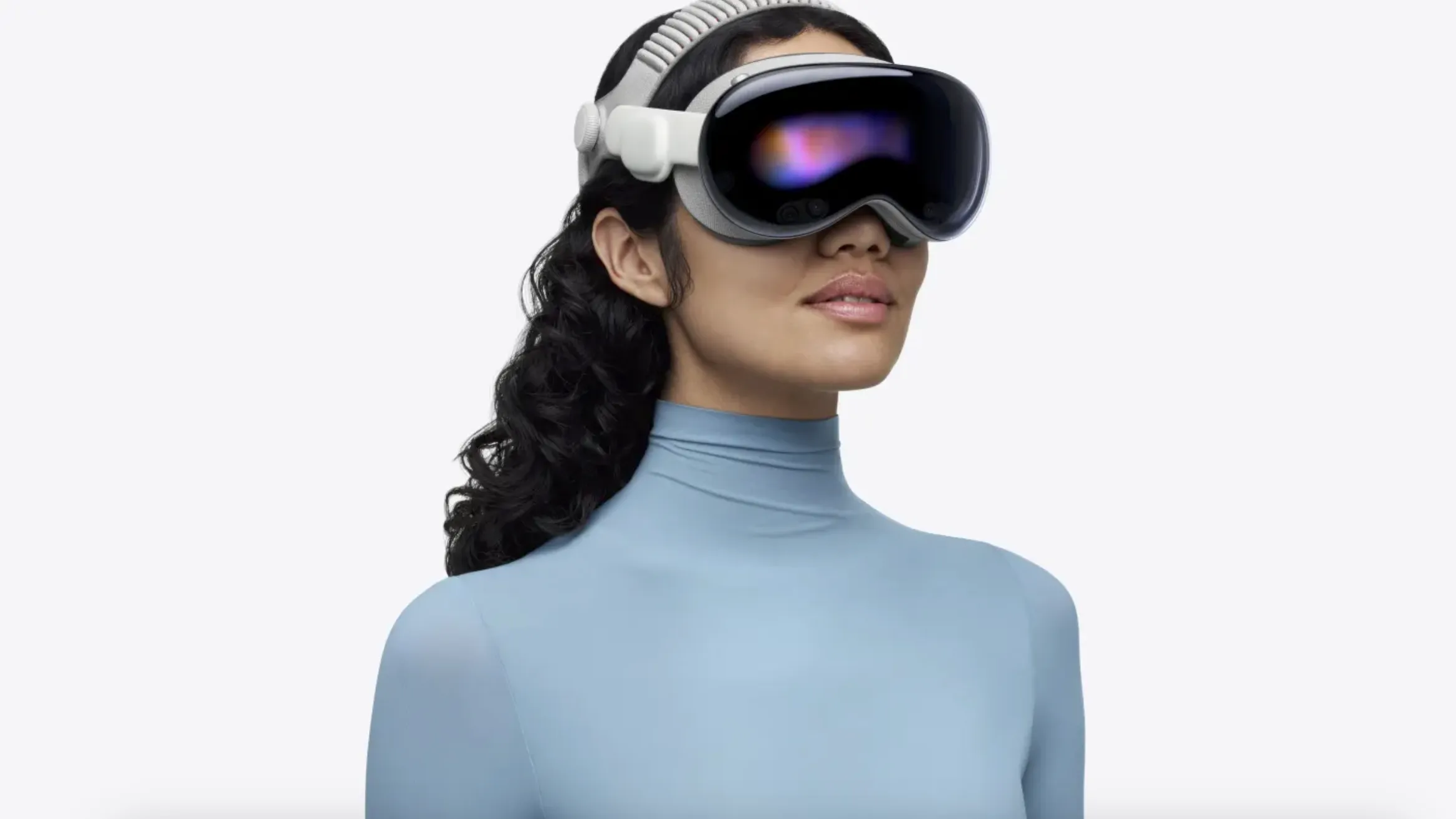
Arguably the boldest device in this lineup is the Apple Vision Pro, which is also the most expensive, starting at $3,499. While it’s still early days for the mixed-reality category, Apple’s second iteration seems more focused, polished, and production-ready.
-
What’s New: It now comes with a Dual Knit Band for better comfort and wearability. While that may seem like a minor update, comfort is often a major barrier to headset adoption, and Apple knows that.
-
M5 Optimization: While Apple hasn’t publicly confirmed the exact chip model inside the Vision Pro, the AI and processing enhancements are clearly linked to the M5’s neural capabilities, allowing for richer spatial experiences, better eye-tracking, and more fluid AR/VR overlays.
-
Why It Matters: Apple’s not banking on Vision Pro to drive revenue, at least not yet. But they are refining the ecosystem, gathering developer feedback, and preparing for a world where spatial computing will coexist with flat screens.
Vision Pro remains Apple’s moonshot, one that could reshape how we think about screens and presence. It’s less about 2025 and more about building the ecosystem of 2030.
Pricing & Market Positioning
Apple made a notable decision this year, no price hikes on these new devices, despite the performance boosts and growing geopolitical uncertainties around tariffs, especially involving semiconductor trade with China.
|
Device |
Starting Price |
Available Date |
|
MacBook Pro 14" |
$1,599 |
Oct. 22 |
|
iPad Pro 11" |
$999 |
Oct. 22 |
|
Vision Pro |
$3,499 |
Oct. 22 |
This is likely a strategic move to preserve volume during the critical December holiday quarter, which has historically been Apple’s strongest in terms of revenue. With the iPhone 17 and Apple Watch Series 11 already in market, Apple is now covering all product categories heading into Q4.
iPads and Macs Still Matter, Even If iPhones Rule
It’s easy to forget that while the iPhone is Apple’s cash cow, generating $45 billion in the June quarter alone, or over 47% of total revenue, its other product lines are still multibillion-dollar businesses.
-
Mac sales in the June quarter reached $8.05 billion, a 15% YoY increase, partly due to the successful launch of the M2-powered MacBook Air earlier in the year.
-
iPad sales, while down 8% YoY, still brought in $6.58 billion, signaling that Apple needs to keep the category fresh if it wants to regain ground.
The Vision Pro’s financial impact? Likely negligible for now. Apple doesn’t break out those numbers, instead lumping it into its broader "wearables, home and accessories" category. But the goal here is not immediate monetization. It's about planting the flag in spatial computing before anyone else truly figures it out.
Apple’s M5 Era Has Begun, And It’s Bigger Than You Think
On paper, Apple’s latest product announcements might feel like iterative upgrades, familiar devices with newer chips. But under the surface, this launch marks a foundational shift in Apple’s product strategy.
With the M5 chip, Apple is no longer just optimizing for speed or battery life, it’s building a hardware ecosystem that is AI-native, future-proof, and designed to evolve in tandem with the most powerful software paradigms of the next decade.
For consumers, it means smarter, faster devices without additional cost. For Apple, it’s a quiet but confident escalation in the tech arms race.
And for the industry? It’s a warning shot that Apple’s AI moment isn’t coming, it’s already here, just hidden in the silicon.