Nepal’s electric vehicle market has grown at a pace that even the global industry didn’t anticipate. In just a few years, EVs went from being an experimental city concept to becoming a mainstream choice for Nepali households. And whenever a market grows this fast, it attracts not just innovators, but also opportunists.
That is exactly what happened here. As major brands like BYD, MG, Tata, and Neta gained traction, a flood of lesser-known EV brands arrived, hoping to cash in on the early boom. Some came with flashy marketing, some with suspiciously cheap pricing, and some with unrealistic promises. But almost all of them had one thing in common: they weren’t ready for long-term commitment.
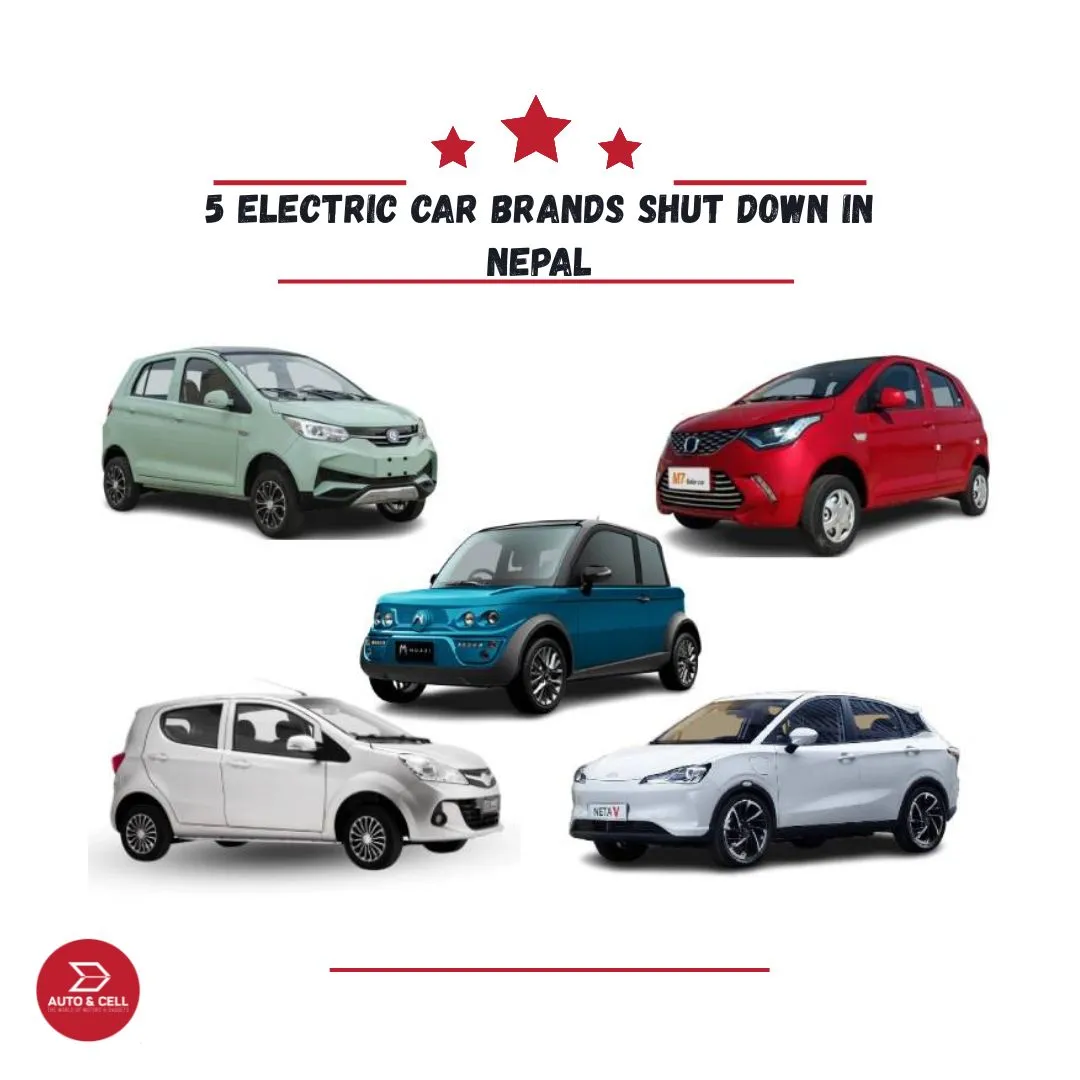
Today, multiple EV brands that once made bold claims have quietly disappeared from Nepal, leaving many buyers with no service support, no spare parts, and in some cases, no trace of the company itself. In this article, we break down five EV brands that have now effectively shut down in Nepal, why they failed, and what lessons consumers should take from their rise and fall.
Raysince EV
Raysince arrived in Nepal with one of the boldest marketing claims for a budget EV: 230 mm ground clearance, solar panel support, and a “feature-loaded hatchback” experience. The importer, Jimini Incorporate Pvt. Ltd., pushed the car aggressively in the first few months.
However, after selling a few initial units, the showroom shuttered unexpectedly, raising serious questions about after-sales responsibility.
Battery, Motor & Features
The Raysince Mini EV was fitted with:
-
23 kWh lithium-ion battery
-
15 kW motor
On paper, these numbers weren't terrible for a small urban EV. The car also featured DRLs, combination headlamps, appealing tail lights, a digital instrument cluster, infotainment system, adjustable front seats, EPS, brake assist, rear camera, and thermal/charging protection systems.
At a launch price of Rs. 24 lakh, many buyers saw it as a cheaper alternative to established brands. But the lack of company accountability overshadowed its specifications.
Why It Failed
From an industry standpoint, Raysince is a classic example of a product-first, support-later business model. EVs require reliable parts availability and long-term service infrastructure, something this brand never had.
Digo E-8
The Digo Group introduced the E-8 hatchback with significant fanfare, even onboarding comedy legend Madan Krishna Shrestha as the brand ambassador. Yet within three years, the E-8 virtually disappeared from the market.
Today, owners cannot source spare parts, and although the company still sells vans and thus operates a service center, E-8 car support is nonexistent.
Specifications
-
15.2 kWh lithium battery
-
15 kW motor
-
Price at launch: Rs. 21,94,500
Why It Failed
Digo E-8 suffered from two major issues:
-
Limited parts ecosystem, since the brand wasn’t tied to a globally established manufacturer.
-
Very narrow product portfolio, meaning once sales slowed down, the company had no incentive to invest in long-term service.
This highlights an important EV market truth: companies with only one experimental product rarely survive.
Derry Brand
Brought to Nepal by AutoHost, the Derry brand made a loud entrance with two hatchback models, EV-7 and EM-7. The company went as far as setting up a showroom in Anamnagar, presenting itself as a serious EV contender.
The EM-7 even offered integrated solar panel support, a feature that attracted environmentally conscious buyers.
Pricing & Market Position
-
Derry EV-7 price: Rs. 25,99,000
-
Derry EM-7 price: Rs. 26,50,000
Why It Failed
Derry’s downfall was a combination of overpromising and under-delivering. The company failed to establish a stable parts supply chain and did not secure enough market volume to sustain operations. Once sales slowed, customer support vanished overnight.
The result? Many owners are now unable to find even basic components.
Huazi Auto
Huazi is one of the more unusual cases. Initially bought by Sumargi Group and later by Chaudhary Group (CG), Huazi EVs never officially entered large-scale sales in Nepal.
Only two units reportedly entered Nepal, and these are still being used by Garud Securities.
Specs:
-
18 kWh battery
-
24 kW motor
-
15-inch wheels
Huazi also had plans under the Kawei sub-brand to introduce pickup trucks in Nepal, but those too faded without a trace.
Why It Failed
Huazi suffered from three fatal weaknesses:
-
No official launch, meaning no commitment to after-sales service.
-
Low production stability in China, leading to parts uncertainty.
-
Distributor instability, since the brand shifted hands before disappearing entirely.
This shows that even big Nepali business houses can misjudge EV readiness when the manufacturer itself lacks global stability.
Neta Auto
Perhaps the biggest shock to Nepal’s EV market was the sudden decline of Neta, brought by CG Motors. Unlike the other brands on this list, Neta actually succeeded, massively.
The Neta V became one of Nepal’s most popular EVs, with 725 units sold between 2021–2024. The Neta X, a compact SUV, also saw 63 imports.
However, the manufacturer in China filed for bankruptcy, leading to a halt in global production. As soon as Neta’s parent company struggled, Nepal’s sales and service pipeline froze instantly.
Why It Failed
Neta’s failure was not due to local issues but a global financial collapse. The brand expanded aggressively worldwide but did not have the cashflow to sustain rising competition and operational costs in China.
For Nepali consumers, this was a harsh reminder: Even a fast-selling EV brand is only as stable as its manufacturer.
Conclusion
Nepal’s EV boom brought innovation, competition, and affordable alternatives to traditional fuel-based cars. But it also opened the door for unstable brands that weren’t prepared for long-term commitments. While major players continue to grow and invest in infrastructure, these five brands serve as cautionary tales.
The lesson for consumers is clear:
Don’t just look at price and features, evaluate manufacturer credibility, service network, global presence, and long-term parts security.
As Nepal continues to shift toward cleaner mobility, making informed buying decisions will be key to ensuring the EV revolution benefits consumers, not just opportunistic brands.
-original.webp)
-original.webp)
-original.webp)